
Narcissistic Relationship Recovery: Rebuilding Trust in Yourself
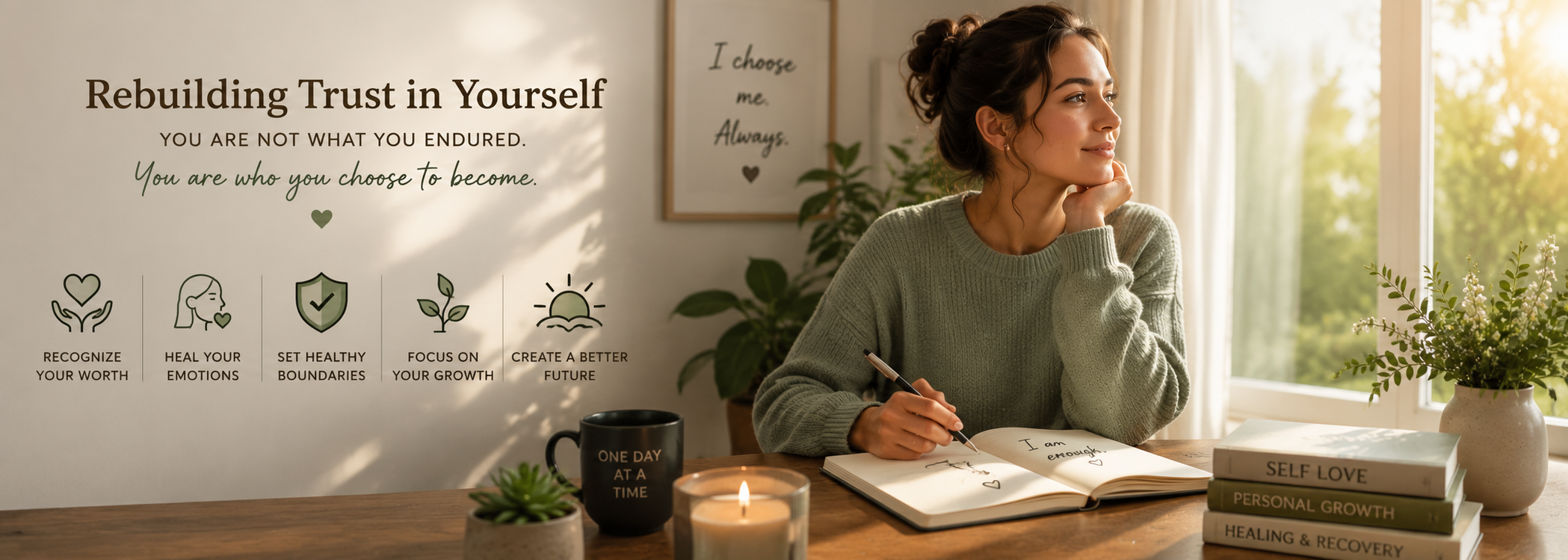
Recovering from a narcissistic relationship can be one of the most challenging emotional journeys a person experiences. The manipulation, gaslighting, emotional highs and lows, criticism, and control often leave survivors questioning their reality, doubting their worth, and struggling to trust themselves.
Many people leave narcissistic relationships feeling confused, emotionally exhausted, and disconnected from the person they once were. The good news is that narcissistic relationship recovery is possible. With awareness, support, and intentional healing, you can rebuild your confidence, restore self-trust, and create healthier relationships moving forward.
In this guide, we'll explore how narcissistic relationships affect self-trust, why recovery takes time, and the practical steps you can take to heal and regain confidence in yourself.
What Is a Narcissistic Relationship?
A narcissistic relationship involves a pattern of emotional manipulation, control, and unhealthy power dynamics often created by an individual with strong narcissistic traits.
These relationships frequently follow a cycle of:
Love bombing
Idealization
Emotional dependency
Devaluation
Manipulation
Gaslighting
Intermittent affection
At first, the relationship may feel intense and exciting. Over time, however, many survivors begin to experience confusion, self-doubt, and emotional exhaustion.
How Narcissistic Relationships Affect Self-Trust

One of the most damaging effects of narcissistic abuse is the gradual loss of trust in yourself.
Many survivors find themselves questioning:
Their memories
Their emotions
Their decisions
Their intuition
Their judgment
This often happens because of repeated manipulation and gaslighting.
What Is Gaslighting?
Gaslighting is a form of emotional manipulation that causes someone to question their reality.
Examples include:
"That never happened."
"You're overreacting."
"You're too sensitive."
"You're imagining things."
Over time, survivors begin relying more on the narcissistic partner's version of reality than their own.
This loss of self-trust can continue long after the relationship ends.
Why Narcissistic Relationship Recovery Feels So Difficult
Many people expect to feel relieved immediately after leaving the relationship.
Instead, they often experience:
Self-doubt
Anxiety
Loneliness
Emotional confusion
Fear of future relationships
Difficulty making decisions
This is completely normal.
Recovery is not simply about ending a relationship. It's about healing emotional wounds and rebuilding the relationship you have with yourself.
The Connection Between Narcissistic Abuse Recovery and Self-Trust
A major goal of narcissistic abuse recovery is learning to trust yourself again.
Healing involves reconnecting with your inner voice and recognizing that your thoughts, emotions, and experiences are valid.
Many survivors discover that rebuilding self-trust becomes the foundation for every other area of recovery, including:
Confidence
Emotional healing
Boundary setting
Relationship choices
Personal growth
The stronger your self-trust becomes, the easier it becomes to move forward.
Step 1: Acknowledge What Happened
Healing begins with accepting the reality of the relationship.
Many survivors minimize their experiences by saying:
Maybe it wasn't that bad.
They had good qualities too.
I should have tried harder.
Acknowledging the emotional harm does not mean focusing on blame.
It means recognizing the truth so you can begin healing.
Acceptance helps reduce confusion and provides clarity for recovery.
Step 2: Understand Trauma Bond Recovery
One reason many survivors struggle to move on is because of trauma bonding.
A trauma bond is an emotional attachment formed through cycles of affection, manipulation, and emotional pain.
Signs of Trauma Bonding
Missing the person despite the abuse
Constantly hoping they will change
Feeling responsible for their emotions
Returning to the relationship multiple times
Ignoring harmful behavior
Trauma bond recovery involves breaking unhealthy emotional attachments and learning healthier relationship expectations.
Understanding trauma bonds helps survivors stop blaming themselves for finding it difficult to let go.
Step 3: Start Listening to Your Intuition Again
Many survivors become disconnected from their instincts after years of emotional manipulation.
Recovery involves rebuilding confidence in your inner voice.
Ways to Strengthen Intuition
Pause before seeking outside validation
Journal your thoughts and feelings
Reflect on past experiences
Notice emotional reactions without judgment
Trust small decisions first
The more you practice listening to yourself, the stronger your self-trust becomes.
Step 4: Rebuild Your Confidence
Narcissistic relationships often leave survivors feeling:
Not good enough
Unworthy of love
Powerless
Emotionally drained
Confidence is rebuilt through small, consistent actions.
Practical Ways to Rebuild Confidence
Celebrate small accomplishments
Set realistic goals
Practice self-compassion
Learn new skills
Spend time with supportive people
Challenge negative self-talk
Confidence grows when you begin proving to yourself that you are capable and resilient.
The Role of Emotional Healing in Recovery
Emotional healing is an essential part of narcissistic relationship recovery.
Many survivors carry unresolved emotions such as:
Anger
Sadness
Shame
Fear
Grief
Ignoring these emotions often delays healing.
Healthy Emotional Healing Practices
Journaling
Meditation
Therapy
Support groups
Exercise
Mindfulness practices
Creative expression
Healing does not mean forgetting what happened.
It means learning how to move forward without allowing the past to control your future.
Step 5: Establish Healthy Boundaries
Many narcissistic relationships involve repeated boundary violations.
As a result, survivors often struggle to recognize or enforce healthy limits.
Examples of Healthy Boundaries
Saying no without guilt
Protecting your time and energy
Limiting contact with toxic individuals
Communicating needs clearly
Refusing disrespectful treatment
Healthy boundaries help rebuild confidence and create emotional safety.
How Toxic Relationship Recovery Supports Healing
Narcissistic relationships are often highly toxic relationships.
Toxic relationship recovery involves identifying unhealthy patterns and learning healthier alternatives.
Healthy Relationship Qualities
Mutual respect
Honest communication
Accountability
Emotional safety
Trust
Consistency
Healthy boundaries
Understanding what healthy relationships look like helps prevent future unhealthy dynamics.
Step 6: Reconnect with Your Identity
Many survivors lose touch with who they are while trying to maintain a difficult relationship.
Recovery involves reconnecting with:
Personal values
Interests and hobbies
Goals and dreams
Friendships
Passions
The stronger your sense of self becomes, the less power the past relationship holds over you.
Step 7: Seek Support During Recovery
Healing becomes much easier when you have support.
Many survivors benefit from:
Therapists
Coaches
Trusted friends
Support groups
Healing communities
Support provides validation, encouragement, accountability, and hope.
Connecting with people who understand your experiences can significantly accelerate recovery.
Common Challenges During Narcissistic Relationship Recovery
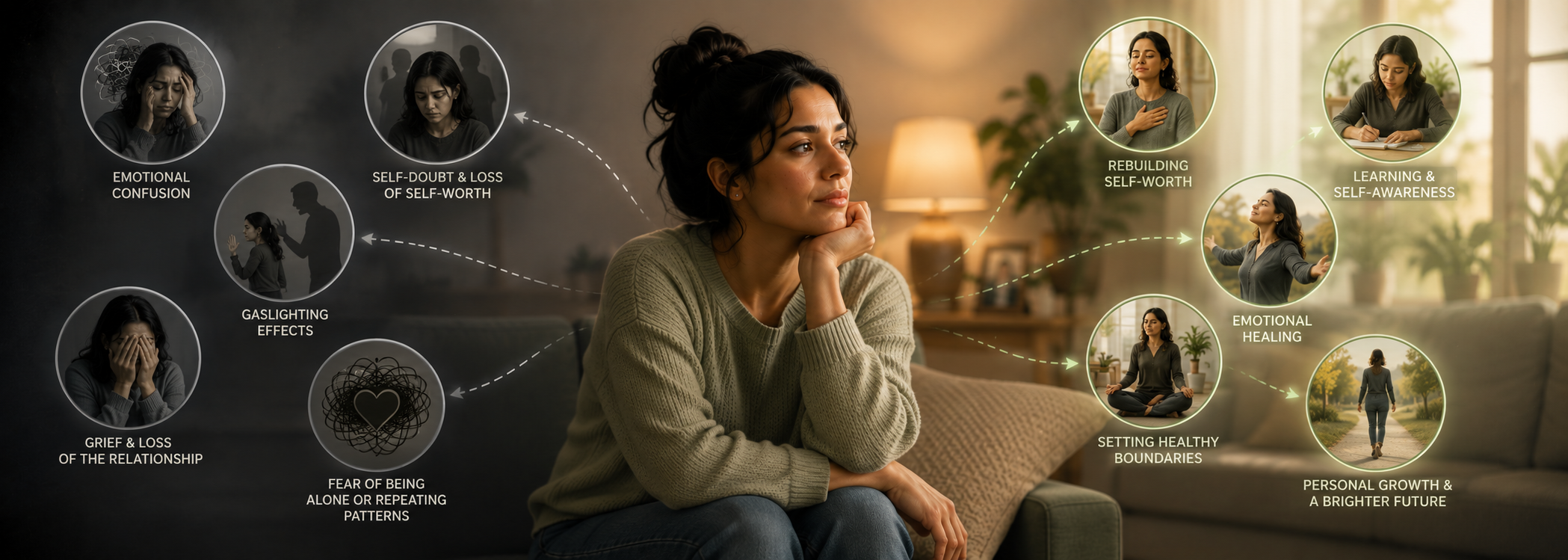
Self-Doubt
Many survivors continue questioning their decisions long after the relationship ends.
Loneliness
Even unhealthy relationships can create strong emotional attachments.
Fear of Future Relationships
Many individuals worry about repeating past mistakes.
Emotional Triggers
Certain conversations, places, or memories may trigger emotional reactions during recovery.
These challenges are normal and often become easier to manage as healing progresses.
Signs You're Healing

Recovery often happens gradually.
Signs of progress may include:
Increased confidence
Stronger boundaries
Improved decision-making
Greater emotional stability
Less self-blame
Increased self-awareness
Healthier relationships
More trust in yourself
Every step forward is evidence that healing is taking place.
Frequently Asked Questions About Narcissistic Relationship Recovery
How long does narcissistic relationship recovery take?
Recovery timelines vary. Healing depends on factors such as the length of the relationship, available support, and personal circumstances.
Can narcissistic abuse affect self-confidence?
Yes. Many survivors experience low self-esteem, self-doubt, and difficulty trusting themselves after the relationship ends.
What is trauma bond recovery?
Trauma bond recovery involves breaking unhealthy emotional attachments created through cycles of manipulation and emotional dependency.
Can support groups help with narcissistic abuse recovery?
Absolutely. Support groups provide education, validation, encouragement, and community throughout the healing process.
Final Thoughts
Narcissistic relationship recovery is about more than moving on from a difficult relationship. It's about rebuilding trust in yourself, restoring confidence, and reconnecting with the person you were always meant to be.
While healing takes time, every step you take brings you closer to emotional freedom, self-respect, and healthier relationships.
You deserve relationships that are built on trust, honesty, empathy, and mutual respect.
Most importantly, you deserve to trust yourself again.
Continue Your Recovery Journey with Relationship Essentials
At Relationship Essentials, we understand how difficult it can be to heal from narcissistic relationships.
Our supportive groups are designed to help individuals:
Recover from narcissistic abuse
Heal trauma bonds
Rebuild self-worth and confidence
Establish healthy boundaries
Improve communication skills
Create healthier relationship patterns
Join our upcoming Meet & Greet to learn more about our:
Narcissistic Abuse Recovery Group
Communication Skills Group
Boundaries & Self-Worth Group
You don't have to navigate recovery alone. The right support, guidance, and community can help you heal, grow, and confidently move forward into a healthier future.
We recommend our Solo Dates Journal for anyone working to rebuild trust in themselves after a narcissistic relationship. Through guided reflection prompts and self-discovery exercises, this journal encourages you to reconnect with your authentic self, strengthen self-trust, gain clarity about your values, and develop greater confidence in your thoughts, feelings, and decisions.
Explore our full collection of journals and self-growth resources to find the tools that best support your healing and personal development journey, Click here.