
Why Your Relationship With Yourself Is the Most Important Relationship

When we think about relationships, we often focus on others — partners, friends, family, or colleagues. We try to improve those relationships, fix problems, and seek connection.
But there is one relationship that affects all others — your relationship with yourself.
The way you think about yourself, treat yourself, and understand your emotions shapes every decision you make and every relationship you build.
In this blog, you will understand why your relationship with yourself is the most important and how it impacts your life in powerful ways.
What Does It Mean to Have a Relationship With Yourself?
Your relationship with yourself is how you:
Think about yourself
Talk to yourself
Treat yourself
Understand your emotions and needs
It includes your self-respect, self-awareness, self-worth, and self-care.
Just like any relationship, it needs attention, effort, and care.
Why Your Relationship With Yourself Is So Important
Many people ignore their inner world and focus only on external relationships. But your internal relationship controls how you experience everything in life.
1. It Affects Your Confidence
When you have a strong relationship with yourself, you feel more confident.
You:
Trust your decisions
Believe in your abilities
Feel secure without needing constant validation
On the other hand, if your self-relationship is weak, you may:
Doubt yourself
Seek approval from others
Feel insecure
Confidence starts from within.
2. It Shapes Your Relationships With Others
The way you treat yourself sets the standard for how others treat you.
If you:
Respect yourself
Set boundaries
Know your worth
You are more likely to attract healthy relationships.
But if you:
Ignore your needs
Accept disrespect
Depend on others for validation
You may find yourself in unhealthy or one-sided relationships.
3. It Influences Your Decisions
Your decisions are based on how you see yourself.
If you trust yourself, you:
Make clear and confident choices
Follow your values
Take responsibility for your life
If you lack self-awareness, you may:
Feel confused
Follow others blindly
Make decisions based on fear
A strong relationship with yourself brings clarity.
4. It Helps You Handle Challenges Better
Life is full of ups and downs.
When you have a healthy relationship with yourself:
You stay calm during difficult situations
You understand your emotions
You recover faster from setbacks
Instead of blaming yourself, you support yourself.
5. It Improves Your Emotional Wellbeing
Your inner dialogue affects your emotional health.
If you are kind to yourself:
You feel more peaceful
You reduce stress
You build emotional strength
But if you constantly criticize yourself:
You feel anxious
You feel overwhelmed
You struggle emotionally
Your emotional wellbeing starts with how you treat yourself.
Signs You Have a Weak Relationship With Yourself

It is important to recognize if your self-relationship needs improvement.
Some common signs include:
Constant self-doubt
Negative self-talk
Seeking validation from others
Ignoring your own needs
Difficulty setting boundaries
If you notice these signs, it means you need to focus more on yourself.
How to Build a Strong Relationship With Yourself
Improving your relationship with yourself takes time, but simple steps can make a big difference.
1. Practice Self-Awareness
Start by understanding your thoughts, emotions, and behavior.
Ask yourself:
What am I feeling?
Why am I reacting this way?
This helps you connect with yourself.
2. Be Kind to Yourself
Treat yourself with kindness and patience.
Instead of being harsh, remind yourself:
I am learning
I am growing
Self-compassion builds inner strength.
3. Set Healthy Boundaries
Respect your time and energy.
Learn to:
Say no
Avoid toxic situations
Protect your peace
Boundaries show self-respect.
4. Take Care of Your Needs
Your needs are important.
Focus on:
Physical health
Emotional wellbeing
Mental peace
When you take care of yourself, you feel more balanced.
5. Spend Time With Yourself
Being alone helps you understand yourself better.
Use this time to:
Reflect
Relax
Do things you enjoy
This strengthens your self-connection.
6. Challenge Negative Thoughts
Pay attention to your inner voice.
If you think:
“I am not good enough”
Ask:
Is this true?
Replace negative thoughts with balanced ones.
7. Accept Yourself Fully
You don’t need to be perfect.
Accept:
Your strengths
Your weaknesses
Your past
Self-acceptance creates peace and confidence.
Benefits of a Healthy Relationship With Yourself
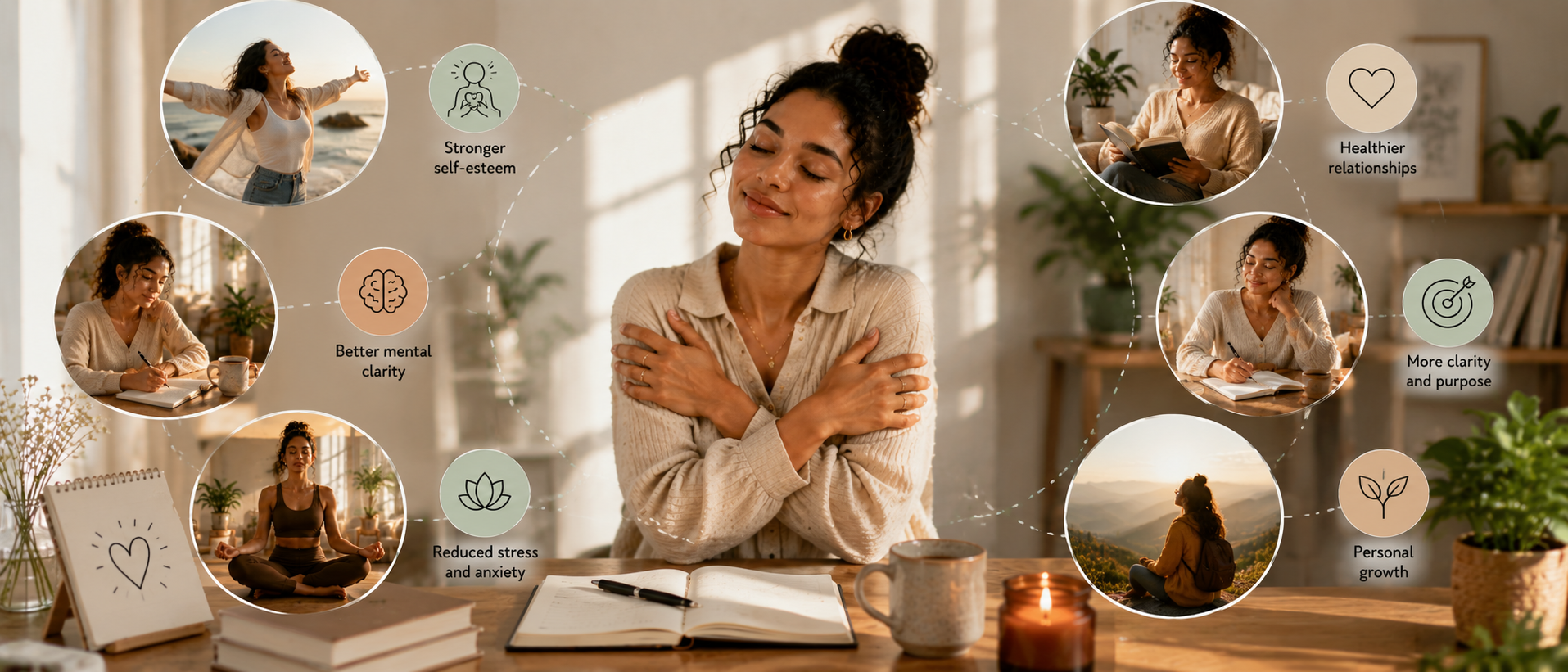
When you improve your relationship with yourself, you will notice:
Stronger confidence
Better emotional control
Healthier relationships
Clear decision-making
Greater peace of mind
You feel more stable, secure, and satisfied.
Common Mistakes to Avoid
While working on your self-relationship, avoid these mistakes:
Comparing yourself to others
Being too critical of yourself
Ignoring your emotions
Expecting quick results
Growth takes time and patience.
Final Thoughts
Your relationship with yourself is the foundation of your life.
When you understand, respect, and support yourself, everything else improves — your confidence, your decisions, and your relationships.
You don’t need to change everything at once. Start small, stay consistent, and be patient with yourself.
The better your relationship with yourself becomes, the better your life will feel.
If you're looking to strengthen the relationship you have with yourself, we recommend our Solo Dates Journal. Designed to encourage intentional self-reflection and personal growth, this journal helps you explore your values, deepen self-awareness, build self-trust, and create a stronger connection with yourself through guided exercises and meaningful reflection.
Explore our full collection of journals and self-growth resources to find the tools that best support your healing and personal development journey, Click here.