
Trauma Bond Recovery: Breaking Free from Unhealthy Attachments

Leaving a toxic or emotionally abusive relationship is often only the beginning of the healing process. Many survivors are surprised to find that even after recognizing the harm they experienced, they still feel emotionally attached to the person who hurt them. This confusing and painful experience is often the result of a trauma bond.
Trauma bonds can make it incredibly difficult to leave unhealthy relationships, maintain boundaries, and move forward with confidence. Survivors may feel trapped between knowing a relationship was harmful and still longing for connection with the person involved.
The good news is that trauma bond recovery is possible. By understanding how trauma bonds develop and learning practical strategies for healing, you can break free from unhealthy attachments and rebuild a healthier relationship with yourself.
In this guide, we'll explore the causes of trauma bonding, signs you may be experiencing one, and the steps you can take toward lasting trauma healing and emotional freedom.
What Is a Trauma Bond?
A trauma bond is a strong emotional attachment that develops between a person and someone who repeatedly hurts, manipulates, or mistreats them while also providing moments of affection, attention, or validation.
These bonds often form through cycles of:
Emotional abuse
Manipulation
Gaslighting
Intermittent affection
Criticism
Reconciliation after conflict
The unpredictable nature of the relationship creates a powerful emotional dependency that can feel extremely difficult to break.
How Trauma Bonds Develop in Toxic Relationships
Trauma bonds don't happen overnight.
They often develop gradually through repeated cycles of emotional highs and lows.
The Cycle of Toxic Attachment
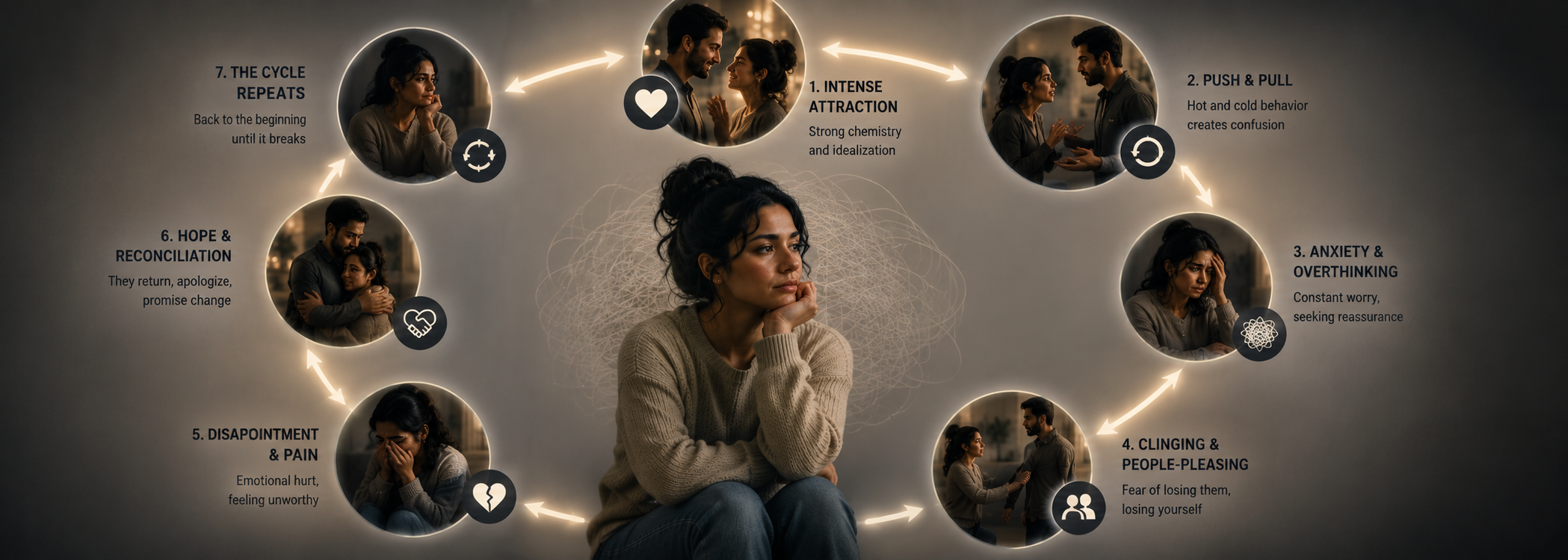
Many unhealthy relationships follow a pattern:
Intense affection or attention
Emotional manipulation or conflict
Apologies, promises, or temporary change
Reconnection and hope
Repeated emotional harm
Over time, this cycle conditions individuals to associate emotional pain with love and connection.
This is one reason toxic relationship recovery can be so challenging.
Signs You May Be Experiencing a Trauma Bond
Many people don't realize they are experiencing a trauma bond until they begin learning about unhealthy relationship patterns.
Common Signs of Trauma Bonding
Missing the person despite knowing they were harmful
Constantly hoping they will change
Defending their behavior to others
Feeling responsible for their happiness
Returning to the relationship multiple times
Ignoring red flags
Difficulty maintaining no contact
Feeling emotionally addicted to the relationship
If these experiences sound familiar, you are not alone.
Trauma bonds are common among survivors of emotional abuse and narcissistic relationships.
The Connection Between Trauma Bonds and Narcissistic Abuse Recovery
Trauma bonding is especially common in relationships involving narcissistic abuse.
Individuals with narcissistic traits often create intense emotional highs followed by periods of manipulation, criticism, or emotional withdrawal.
This pattern can leave survivors feeling confused and emotionally dependent.
Why Narcissistic Relationships Create Strong Trauma Bonds
Narcissistic relationships often involve:
Love bombing
Idealization
Devaluation
Gaslighting
Emotional inconsistency
These behaviors create powerful emotional attachments that make narcissistic abuse recovery more complex.
Understanding this dynamic helps survivors realize that their attachment is not a sign of weakness but a natural response to repeated emotional conditioning.
Why Trauma Bond Recovery Feels So Difficult

Many survivors feel frustrated because they know the relationship was unhealthy but still struggle to let go emotionally.
Several factors contribute to this challenge.
Emotional Dependency
The relationship may have become a primary source of validation, attention, or emotional connection.
Hope for Change
Many survivors continue believing that the person will eventually become the loving version they experienced during the early stages of the relationship.
Fear of Being Alone
Loneliness can sometimes feel less painful than facing the uncertainty of moving forward.
Loss of Identity
Some individuals become so focused on the relationship that they lose touch with their own needs, goals, and identity.
Recognizing these factors is an important part of trauma healing.
Step 1: Accept the Reality of the Relationship
Healing begins with honesty.
Many survivors focus on the good memories while minimizing the harmful behaviors.
Recovery requires acknowledging the full reality of the relationship.
Ask yourself:
How did the relationship make me feel most of the time?
Was my emotional well-being improving or declining?
Did I feel respected, safe, and valued?
Acceptance creates the foundation for healing.
Step 2: Understand Emotional Abuse Recovery
Many trauma bonds are rooted in emotional abuse.
Emotional abuse recovery involves recognizing harmful patterns and rebuilding trust in yourself.
Common effects of emotional abuse include:
Self-doubt
Low self-esteem
Anxiety
Emotional exhaustion
Difficulty trusting others
Understanding these effects helps survivors approach recovery with compassion rather than self-criticism.
Step 3: Create Healthy Distance
One of the most effective ways to break a trauma bond is creating emotional and physical distance.
This may involve:
Limiting communication
Unfollowing social media accounts
Avoiding unnecessary contact
Removing reminders of the relationship
Creating distance allows your mind and emotions time to heal.
Step 4: Rebuild Your Identity
Many survivors lose sight of who they are during unhealthy relationships.
Recovery involves reconnecting with:
Personal values
Interests and hobbies
Goals and dreams
Friendships
Self-care practices
The stronger your connection to yourself becomes, the weaker the trauma bond becomes.
Step 5: Focus on Trauma Healing
Healing from a trauma bond requires addressing the emotional wounds beneath the attachment.
Effective Trauma Healing Practices
Therapy or counseling
Journaling
Mindfulness
Exercise
Meditation
Support groups
Personal development work
Consistent healing practices help regulate emotions and strengthen resilience.
How Support Groups Help Trauma Bond Recovery
One of the biggest obstacles to healing is isolation.
Support groups provide:
Validation
Education
Encouragement
Accountability
Shared experiences
Hearing others describe experiences similar to your own can be incredibly reassuring.
Many survivors find that support groups significantly accelerate recovery.
Step 6: Learn Healthy Relationship Patterns
Recovery isn't only about ending unhealthy attachments.
It's also about learning what healthy relationships look like.
Healthy Relationships Include
Mutual respect
Honest communication
Consistency
Trust
Emotional safety
Healthy boundaries
Accountability
Understanding these qualities helps prevent future unhealthy relationship dynamics.
Common Challenges During Trauma Bond Recovery

Missing the Person
It is normal to miss someone even when the relationship was unhealthy.
Missing them does not mean you should return.
Self-Blame
Many survivors believe they should have left sooner.
Recovery involves letting go of judgment and focusing on healing.
Emotional Triggers
Certain memories, songs, places, or conversations may trigger emotional responses.
These reactions often become less intense over time.
Fear of Future Relationships
Healing helps rebuild confidence and develop healthier relationship standards moving forward.
Frequently Asked Questions About Trauma Bond Recovery
How long does trauma bond recovery take?
Recovery timelines vary for every individual. Consistent healing work and support often lead to steady progress over time.
Can trauma bonds occur without physical abuse?
Yes. Trauma bonds commonly develop in emotionally abusive and narcissistic relationships.
Is trauma bonding the same as love?
No. Healthy love is built on respect, trust, and emotional safety. Trauma bonds are rooted in emotional dependency and inconsistent treatment.
Can support groups help with trauma healing?
Absolutely. Support groups provide community, validation, education, and encouragement that support long-term recovery.
Final Thoughts
Trauma bond recovery is one of the most important steps in breaking free from unhealthy attachments and reclaiming your emotional well-being. While the process can feel difficult at times, healing is possible.
By understanding trauma bonds, creating healthy boundaries, rebuilding self-worth, and seeking support, you can move forward with greater clarity, confidence, and emotional freedom.
The goal is not simply to leave a toxic relationship behind—it's to create a healthier and more fulfilling future.
Continue Your Healing Journey with Relationship Essentials
At Relationship Essentials, we understand how difficult trauma bond recovery can be.
Our supportive groups are designed to help individuals:
Heal from emotional abuse
Recover from trauma bonds
Rebuild confidence and self-worth
Establish healthy boundaries
Improve communication skills
Develop healthier relationship patterns
Join our upcoming Meet & Greet to learn more about our:
Narcissistic Abuse Recovery Group
Communication Skills Group
Boundaries & Self-Worth Group
You don't have to navigate recovery alone. Healing becomes more achievable when you have a supportive community walking beside you every step of the way.
We recommend our Solo Dates Journal for anyone working to heal from unhealthy attachments and reconnect with themselves after a trauma bond. Through guided reflection prompts and self-discovery exercises, this journal helps you rebuild self-trust, rediscover your identity, strengthen your sense of self-worth, and create healthier patterns for future relationships.
Explore our full collection of journals and self-growth resources to find the tools that best support your healing and personal development journey, Click here.