
12 Emotional Healing Techniques to Improve Your Mental Wellness
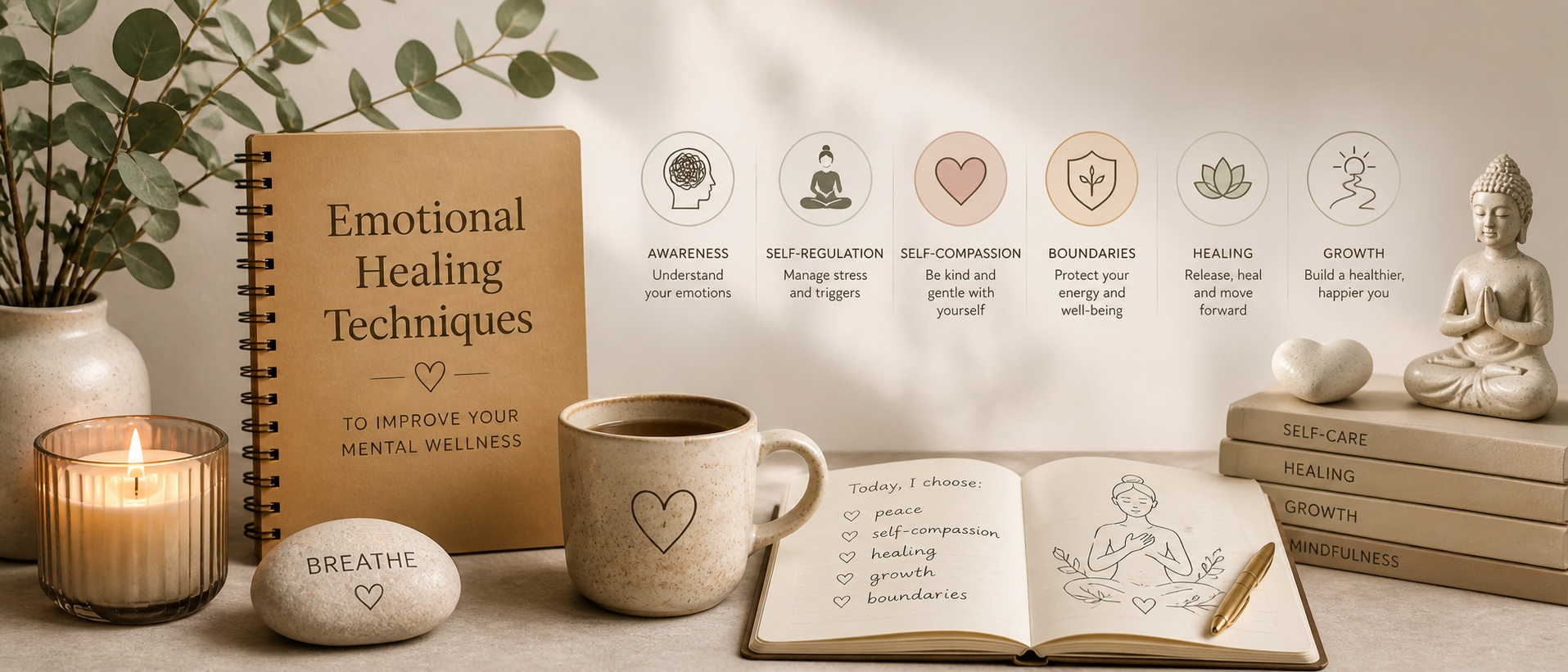
Emotional pain is something everyone experiences at some point in life. It can come from relationships, past experiences, stress, or personal struggles. Sometimes, these feelings stay inside us for a long time and affect how we think, feel, and behave.
This is why learning emotional healing techniques is very important.
Emotional healing is not about forgetting your pain. It is about understanding it, accepting it, and slowly moving forward. When you heal emotionally, you feel lighter, calmer, and more in control of your life.
In this blog, you will learn 12 simple and effective emotional healing techniques that can improve your mental wellness.
What Is Emotional Healing?
Emotional healing means taking care of your emotional pain in a healthy way.
It includes:
Understanding your feelings
Accepting your experiences
Letting go of past hurt
Learning to respond in a better way
Healing takes time, but with the right steps, it becomes easier.
Why Emotional Healing Is Important

When emotional pain is ignored, it can affect your daily life.
You may:
Feel stressed or anxious
Overthink a lot
React strongly to small situations
Struggle in relationships
Feel disconnected from yourself
When you start healing, you:
Feel more peaceful
Think more clearly
Handle situations better
Build stronger relationships
12 Emotional Healing Techniques
Here are simple and practical emotional healing techniques that you can start using today.
1. Accept Your Feelings
The first step to healing is accepting how you feel.
Do not ignore or suppress your emotions. Instead, tell yourself:
“It’s okay to feel this way”
Acceptance helps you start the healing process.
2. Talk to Someone You Trust
Sharing your feelings can reduce emotional pressure.
Talk to:
A close friend
A family member
A coach or counselor
You don’t have to go through everything alone.
3. Write Your Thoughts (Journaling)
Writing helps you express your emotions clearly.
You can write:
What you are feeling
What is bothering you
What you want to change
Journaling helps you understand your emotions better.
4. Practice Deep Breathing
When you feel overwhelmed, your breathing becomes fast.
Try this:
Take a slow deep breath
Hold for a few seconds
Exhale slowly
This helps calm your mind and body.
5. Let Go of Past Hurt
Holding onto past pain can stop you from moving forward.
Ask yourself:
Can I learn something from this?
Can I slowly let this go?
Letting go does not mean forgetting. It means freeing yourself from emotional burden.
6. Be Kind to Yourself
Many people are very hard on themselves.
Instead of blaming yourself, try:
Talking to yourself kindly
Accepting your mistakes
Giving yourself time to heal
Self-compassion is a key part of emotional healing.
7. Identify Your Triggers
Notice what situations or people affect your emotions.
Ask:
What triggers my stress or sadness?
Once you understand your triggers, you can handle them better.
8. Set Healthy Boundaries
Protecting your emotional energy is important.
Learn to:
Say no when needed
Avoid toxic situations
Choose what is good for you
Boundaries help you feel safe and respected.
9. Focus on the Present Moment
Many emotional struggles come from thinking about the past or worrying about the future.
Try to stay present by:
Focusing on your surroundings
Paying attention to your breathing
Doing one thing at a time
This reduces stress and overthinking.
10. Take Care of Your Body
Your physical health affects your emotional health.
Make sure you:
Get enough sleep
Eat healthy food
Exercise regularly
A healthy body supports a healthy mind.
11. Practice Gratitude
Even during difficult times, there are small things to be thankful for.
Every day, think about:
2–3 things you are grateful for
This helps shift your focus from problems to positivity.
12. Seek Professional Support if Needed
Sometimes emotional pain can feel too heavy.
In such cases, it is okay to seek help from:
A therapist
A counselor
A coach
Getting support is a strong and healthy decision.
Signs You Are Healing Emotionally
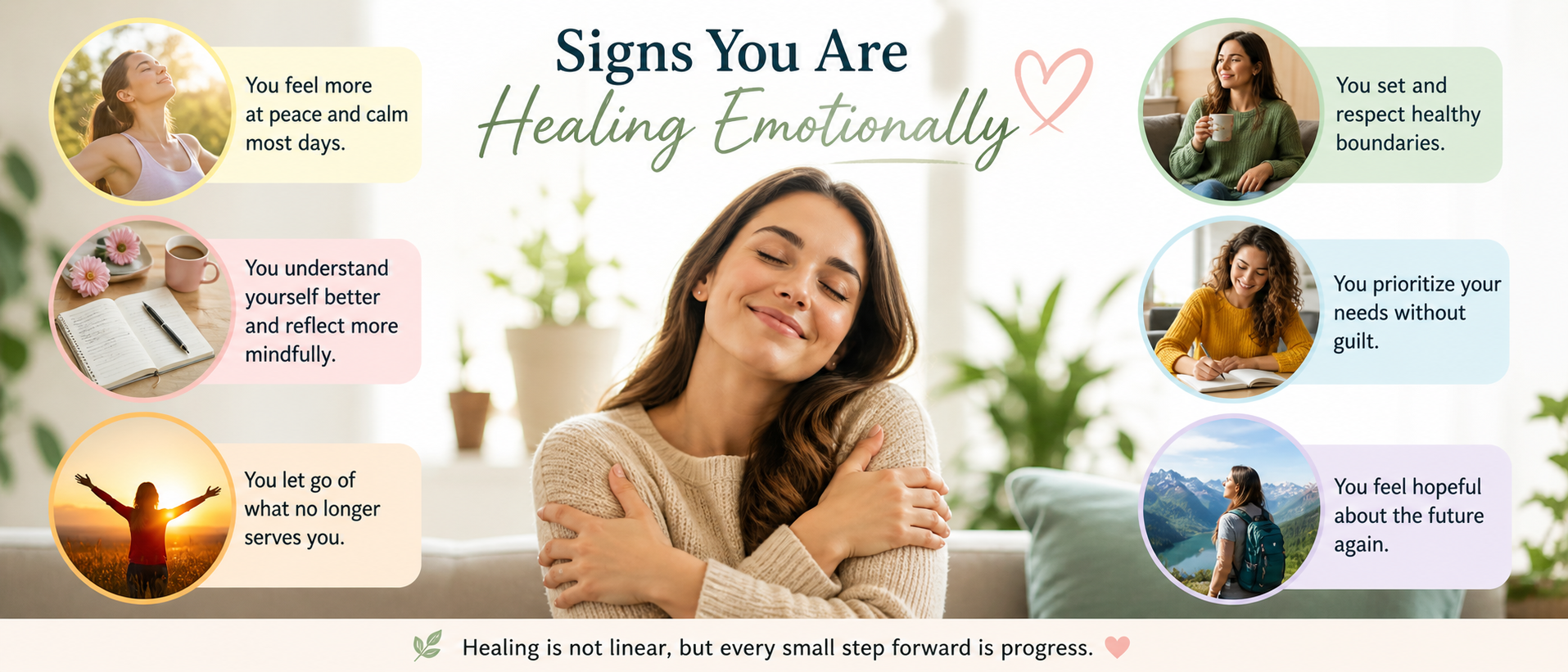
Healing takes time, but you will start noticing small changes:
You feel calmer
You understand your emotions better
You react less impulsively
You feel more in control
You start feeling hopeful again
These are positive signs of growth.
Common Mistakes to Avoid
While working on emotional healing, avoid these mistakes:
Ignoring your feelings
Being too hard on yourself
Comparing your journey with others
Expecting fast results
Healing is a slow and personal process.
Simple Tips to Stay Consistent

Start with 1–2 techniques
Practice daily or regularly
Be patient with yourself
Focus on small improvements
Consistency matters more than perfection.
Final Thoughts
Using the right emotional healing techniques can help you improve your mental wellness and live a more balanced life.
You don’t need to fix everything at once. Start with small steps, be kind to yourself, and allow yourself to grow.
Healing is not a straight path, but every step you take brings you closer to peace and clarity.
Start prioritizing your emotional wellbeing today.
Our My Journal is a valuable tool for anyone looking to support their emotional healing journey and improve their mental wellness. By creating space for daily reflection, emotional processing, and self-discovery, journaling can help you gain clarity, reduce stress, and build a healthier relationship with yourself.
Explore our full collection of journals and self-growth resources to find the tools that best support your healing and personal development journey, Click here.